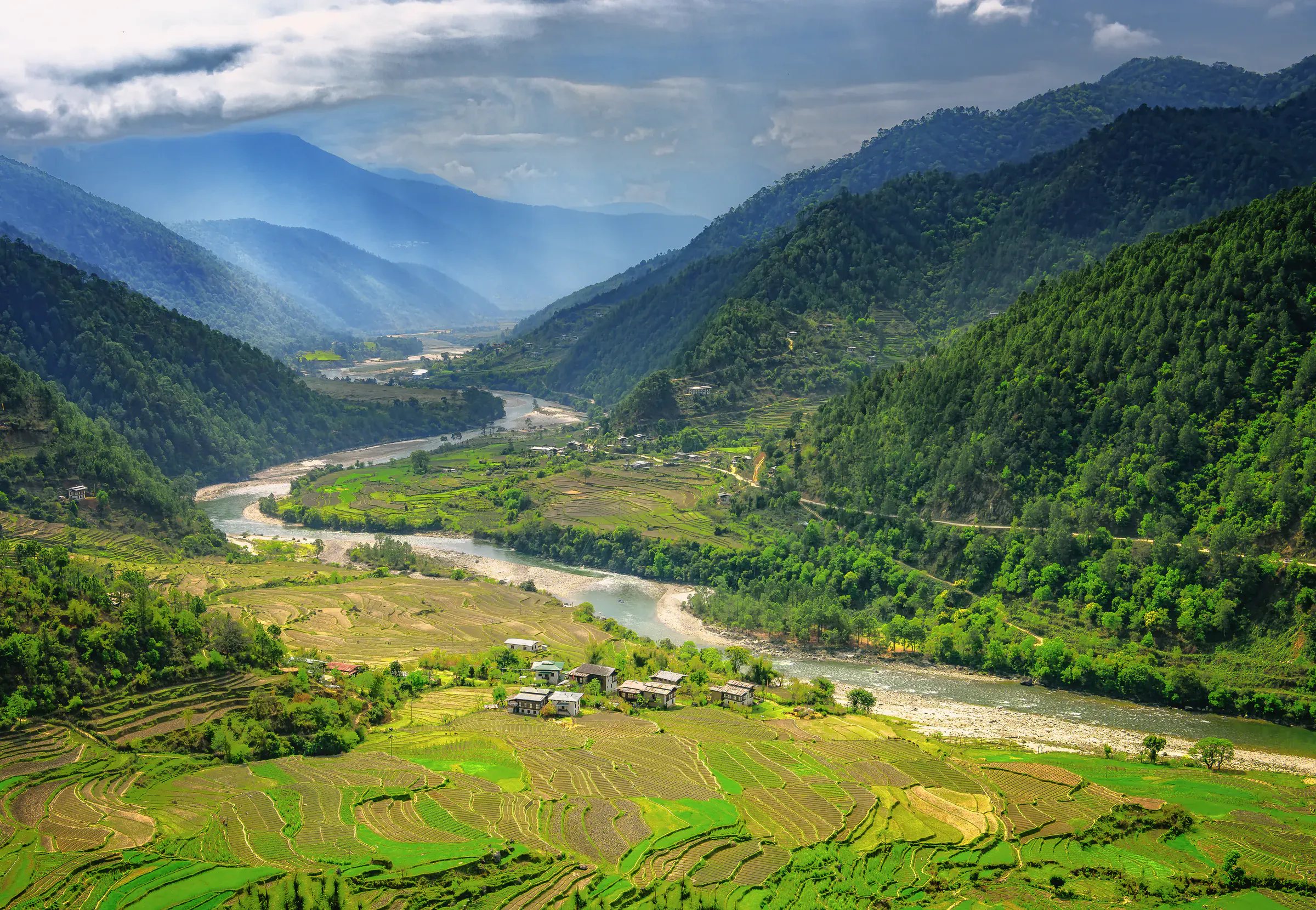
Spring and autumn are good starting points for a first Bhutan trip, especially if you want to walk and attend a festival. Summer brings greener valleys and more rain; winter means colder mornings and fewer visitors. Choose the season around the places and activities that matter to you.
The year at a glance
| Season | Months | The draw | The catch |
|---|---|---|---|
| Spring | Mar-May | Rhododendron bloom, Paro Tshechu, warm clear days | Higher demand for rooms |
| Summer | Jun-Aug | Green valleys and fewer visitors | Monsoon cloud can hide the peaks |
| Autumn | Sep-Nov | The clearest skies of the year, Thimphu Tshechu, golden rice paddies | The busiest season of all |
| Winter | Dec-Feb | Quiet sites, black-necked cranes, crisp light | Cold nights, some high passes close |
Spring: March to May
Spring is the classic choice. Valley temperatures sit around 15-20 °C, visibility is good, and the hillsides go pink and red with rhododendron bloom. It's also festival season, Paro Tshechu falls in late March or April and is the single biggest draw on the calendar, and conditions for the Tiger's Nest hike are close to ideal.
The trade-off is demand. Spring is peak season, prices are at their highest, and you'll want to book 3 to 6 months ahead, more if you're timing a festival.
Summer: June to August
The monsoon has a worse reputation than it deserves. Valleys are green and days are warm, but rain can disrupt outdoor plans and road travel. Keep some flexibility in the route.
Cloud can sit on the mountains for days, so if Himalayan views are the point of your trip, this is the risky window. Trails get muddy and the occasional road delay happens. For culture-focused trips it's underrated.
Autumn: September to November
Autumn brings harvest colours and cooler walking weather. Mountain views often improve after the monsoon, though September can still be wet. Thimphu Tshechu falls in this window and is the most accessible of the big festivals.
It's also the busiest season. Book six months or more ahead, expect peak pricing, and expect company on the popular trails.
Winter: December to February
Winter is the quiet season, and it has real charms: quieter sites, clear light and black-necked cranes wintering in the Phobjikha Valley. Valley days are mild, nights are properly cold, and some high passes close after snow. Days are shorter, so itineraries run a little tighter.
Ask about heating at each hotel, particularly if your route includes Phobjikha or Bumthang.
Timing around festivals
The tshechus are among the best reasons to pick one window over another. The major ones: Punakha Drubchen (February/March), Paro Tshechu (March/April), Thimphu Tshechu (September/October), and Jambay Lhakhang Drup (October/November). Dates follow the lunar calendar and move each year, our festival calendar has the current ones.
Month by month
If you already know roughly when you can travel, we've written a dedicated guide for every month with temperatures by region, that month's festivals, packing notes, and advice on whether the month fits your plans: January, February, March, April, May, June, July, August, September, October, November, December.
How we'd choose
For a first trip, aim for late March to early May or late September to early November. That's the best combination of weather, visibility, and festivals, and it's when our 7-day itinerary shows at its best.
Summer and winter can suit travellers who prefer quieter sightseeing and can adapt to the weather. Check the current package estimate, flights and any hotel upgrades for your dates before deciding which season suits you.
Explore our tours or tell us your dates and we'll help you plan for the conditions.